
Case Study
Muddy Creek Case Study
Fall 2024 – Winter 2025
In 2022, a private landowner came to the Lancaster County Conservation District (LCCD) with concerns about habitat and erosion along his section of Muddy Creek. Due to a lack of forested habitat, over-grazing, an undersized bridge culvert, failing stream crossing, and historic channel modifications, Muddy Creek has limited aquatic habitat and eroded banks.
The project was designed, permitted, and constructed in partnership with the U.S Fish and Wildlife Service, Habitat for Forever, and Unique Excavating.
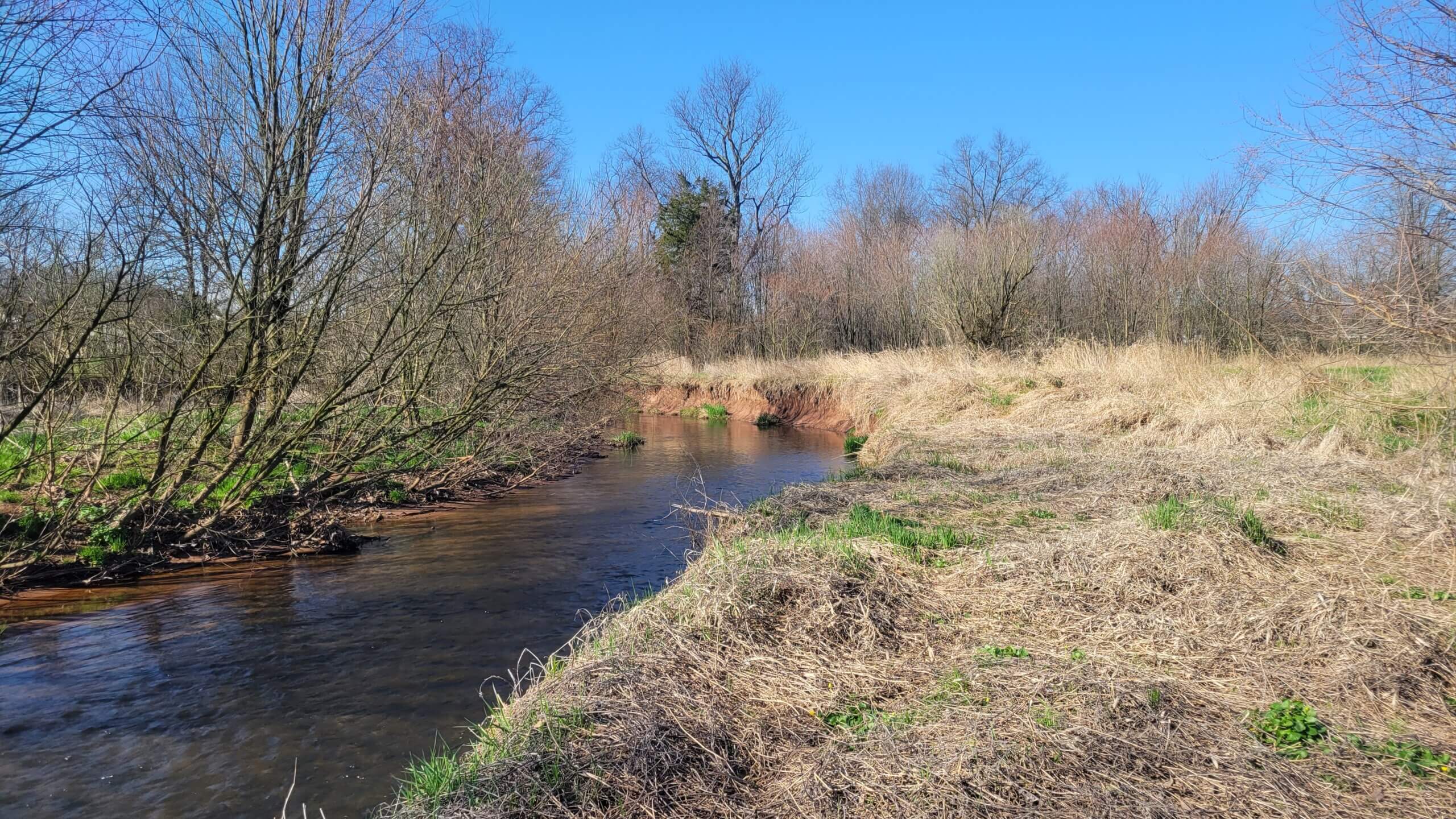
The landowner’s stream before construction. Notice the eroded stream banks and lack of trees.
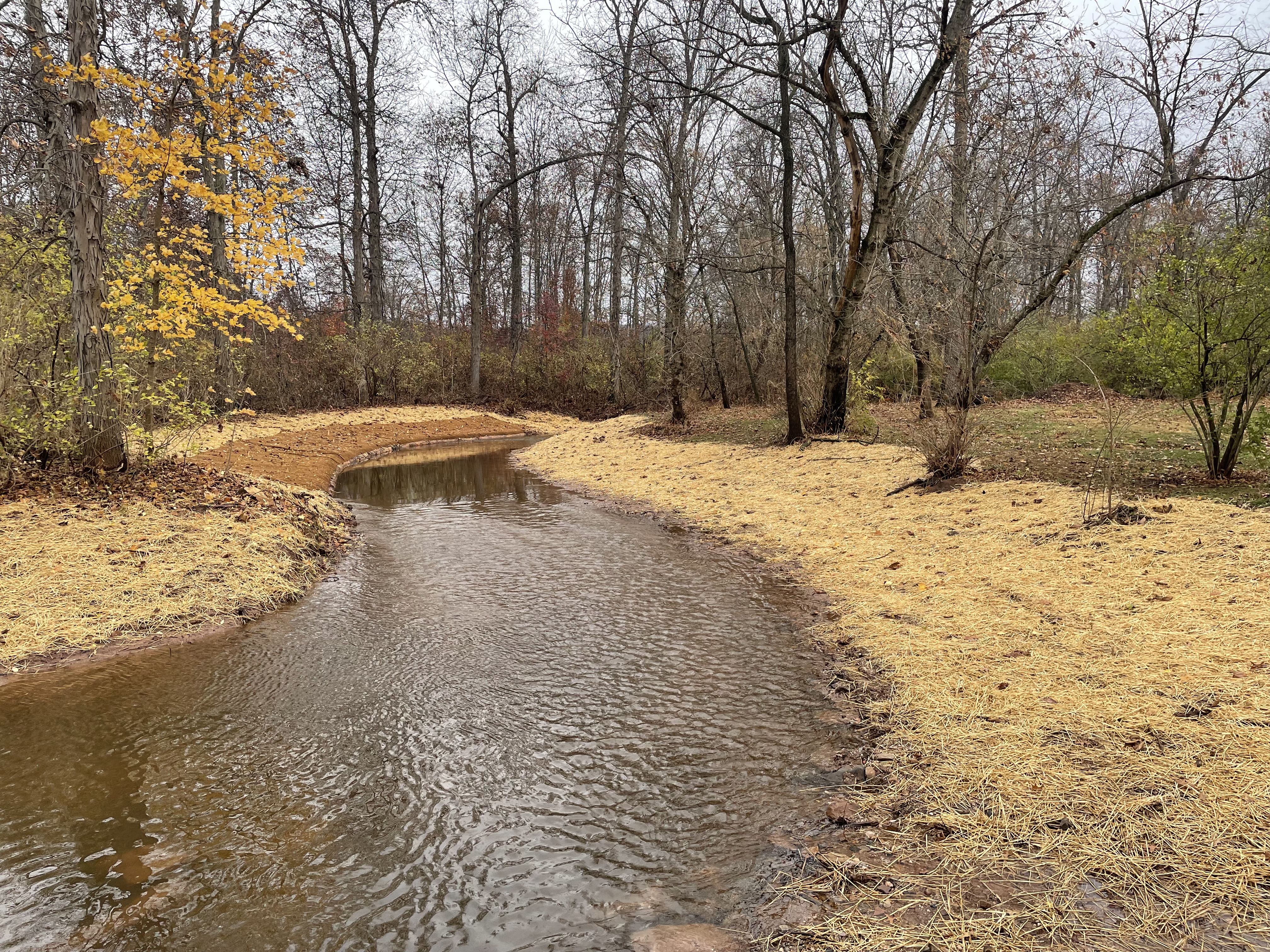
Bank grading has helped smooth a once steep, eroded stream bank. The mudsill offers bank protection and provides habitat for fish.
Construction began in the fall of 2024 and quickly caught the attention of Narvon community members. Toward the bottom of the project, there is a footbridge that allows plain sect children to cross over Muddy Creek to get to school, so the property is an important part of the community. The private landowner used the stream project to showcase the importance of restoration work in the Conestoga River watershed.
U.S. Fish and Wildlife Services installed some of the following in-stream structures: mudsills, single log vanes and rock cross vanes, riffles, brush mattresses, and vernal pools. Each of these structures has a purpose, whether that be to armor the bank from erosion, oxygenate the stream, or provide habitat for bugs and fish. The unnamed tributary to Muddy Creek is designated as a High Quality-Trout Stocking stream, so both the District and U.S. Fish and Wildlife Services were confident that trout will appreciate the new in-stream structures.
Not only was the landowner eager to learn, but he was eager to share what he learned about in-stream habitat structures with his community. One way he intends to do so is by hosting a fishing derby for the community.
After construction was complete, a riparian buffer was planted over the course of two days. Local plain sect students assisted on the first day, and The Stone Independent School students finished planting on the second day. A total of 700 trees were planted with the help of over 50 volunteers! This buffer will help disperse flood waters, reduce erosion, capture nutrients and pollutants, and stabilize the stream banks.
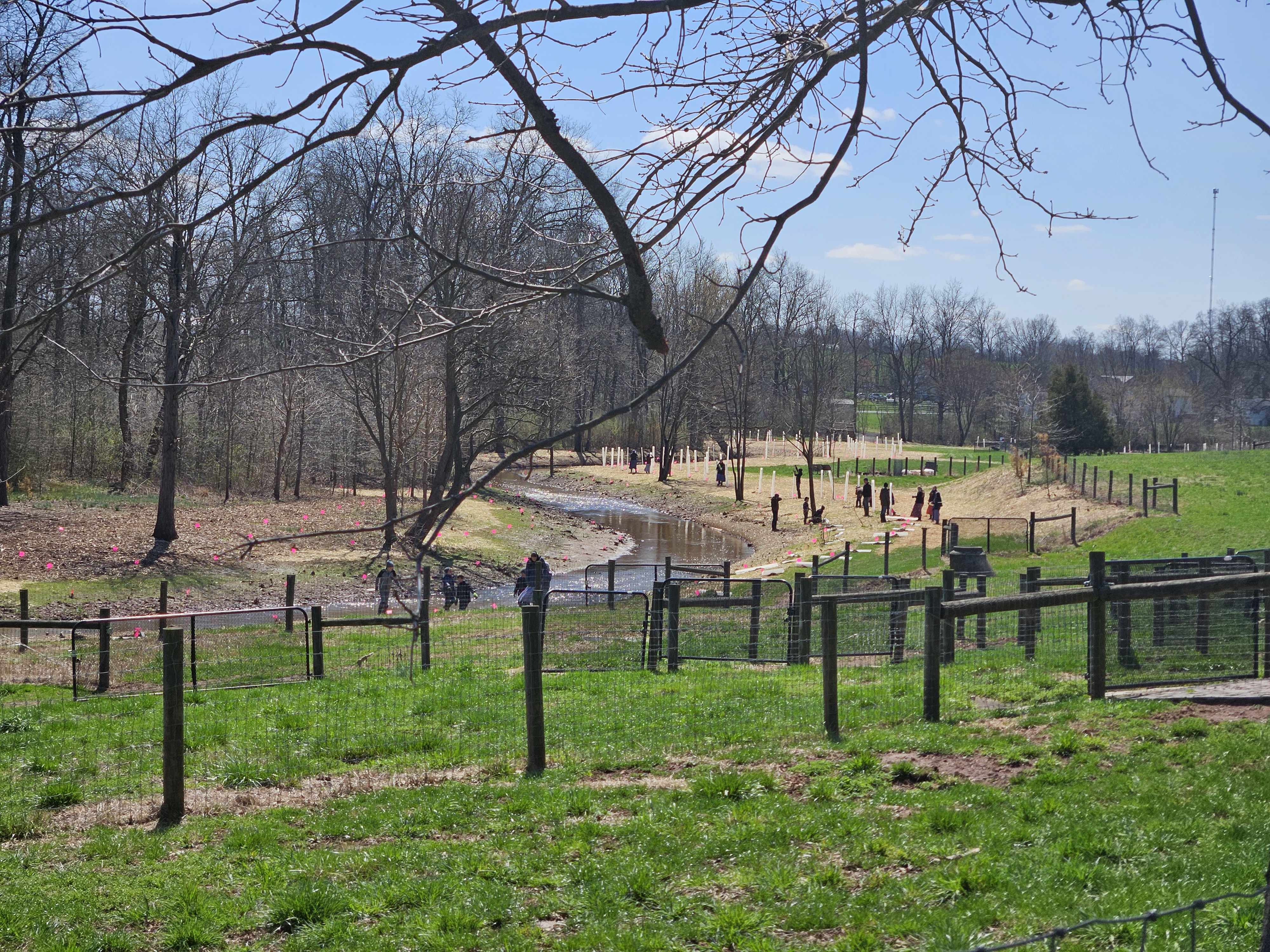
Volunteers planting trees after stream restoration has been completed.
Final Result
In total, 3,400 linear feet of streambank were restored and a 3-acre riparian buffer with fencing was completed. We are not only proud to have installed a project that created in-stream habitat and reduced nutrients and sediment input into our local stream, but we are excited at the opportunity the local community has to be environmental stewards for their watershed. The project generated interest in restoring more of Muddy Creek and having community members be active participants in conservation practices.
— Watershed Team at the Lancaster County Conservation District