
Case Study
UNT to Pequea Creek Case Study
Fall 2023
Introduction
A private landowner reached out to the Lancaster County Conservation District (LCCD) in 2021 with concerns about eroded streambanks on an unnamed tributary to Pequea Creek at Shiprock Woods. In some areas, the streambanks had eroded upwards of six feet. Lack of woody vegetation in certain areas of the stream was also raising the temperature of the stream, resulting in poor habitat for aquatic life.
The landowner later joined in collaboration with the Lancaster Conservancy, which manages Shiprock Woods Nature Preserve, to work on a solution. Together, the District, the Conservancy, and the landowner agreed that a stream restoration project was necessary to solve issues caused by farms and suburban areas upstream. In addition, the farms upstream and downstream of the preserve have forested streamside buffers. Installing this project connected existing habitat, improving a longer section of this stream.
What do we mean by “stream restoration” and why is it important?
We can address environmental challenges by restoring our local streams. Stream restoration uses various techniques to improve the health of our streams and protect habitat. The District focuses on methods that implement in-stream woody habitat and bank stabilization with rock to reshape the streambank and enhance the flexibility of the stream’s natural bend and curvature.
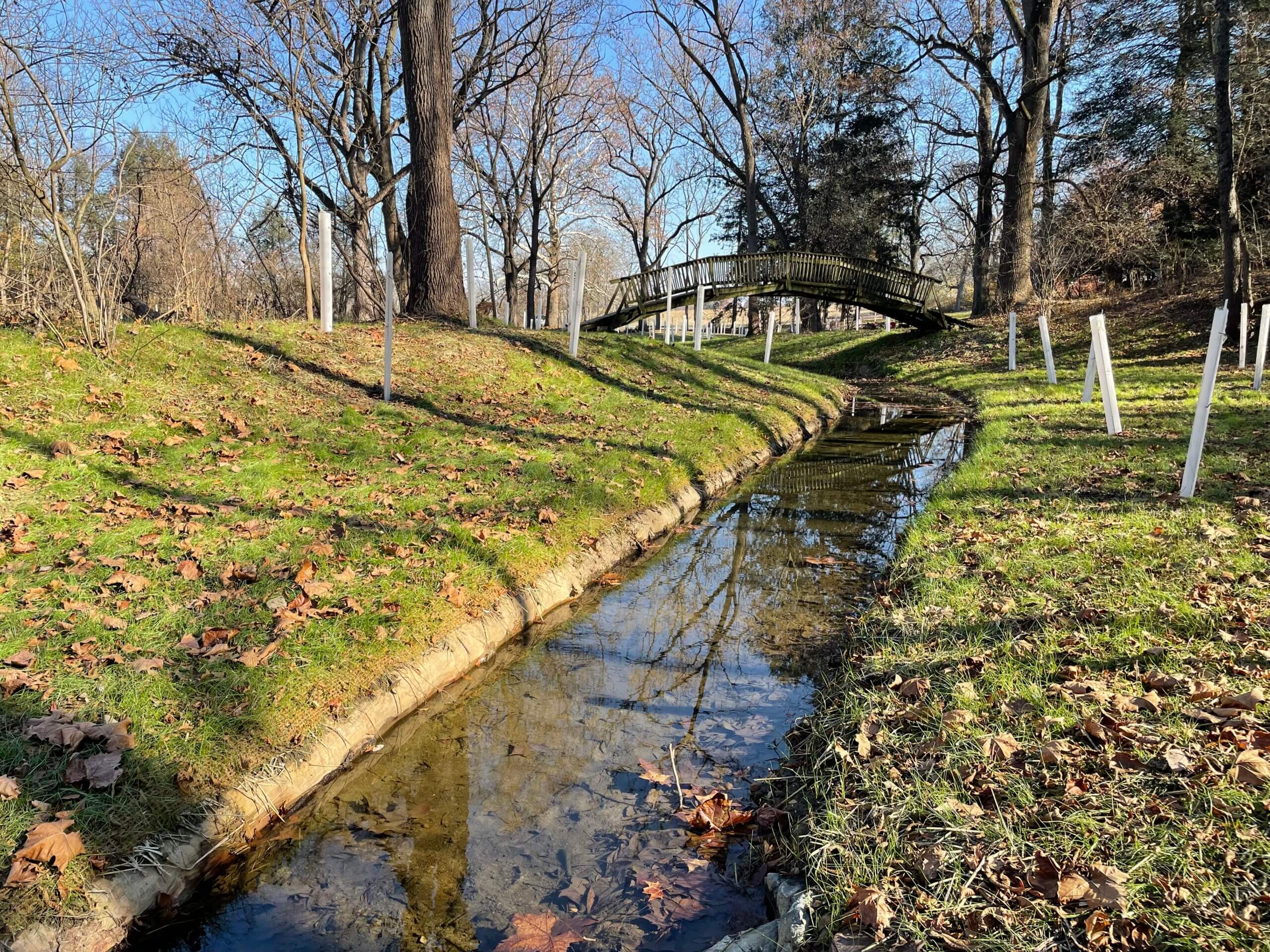
Example of a mudsill on the left streambank.
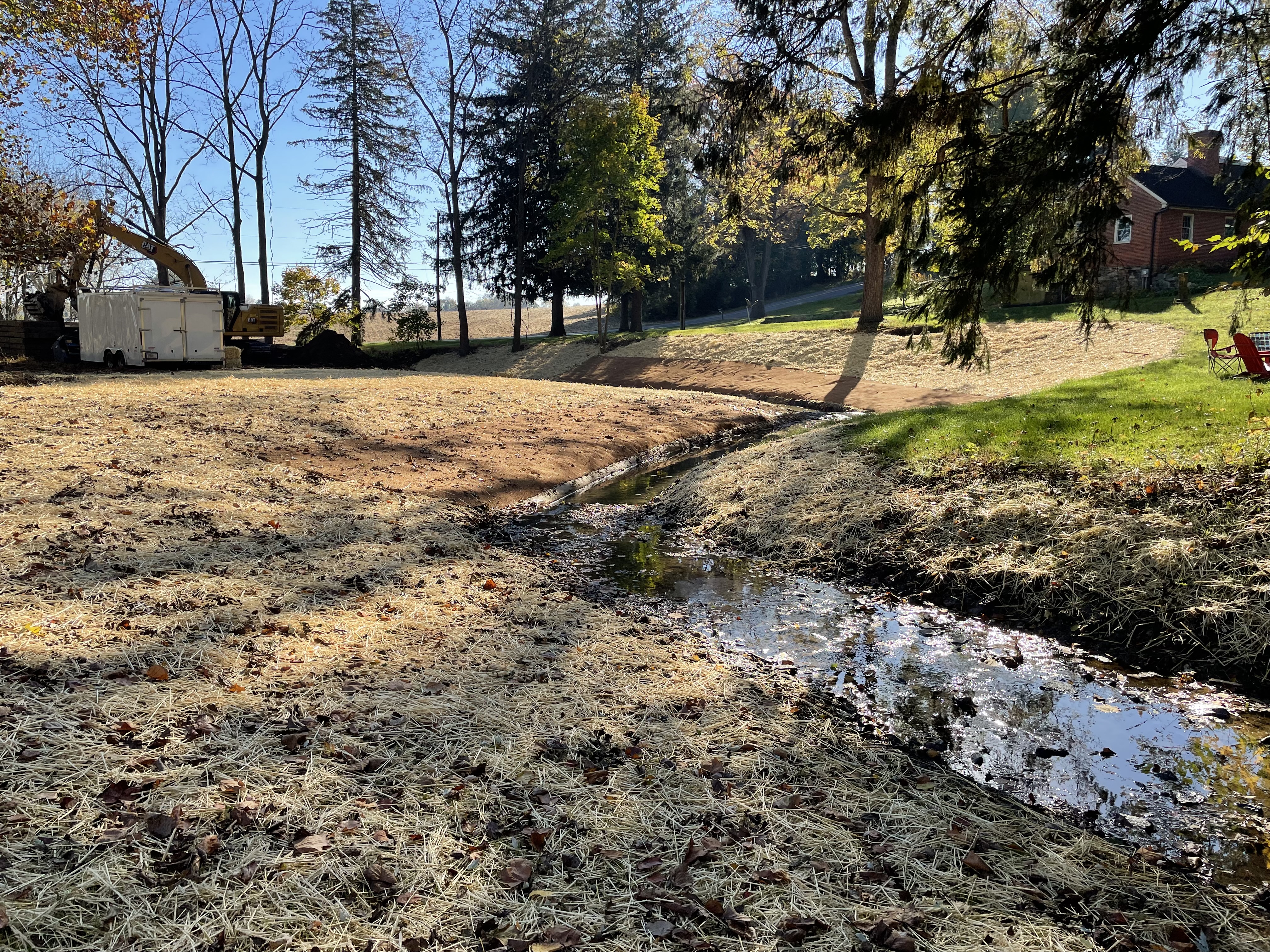
Here you can see the banks have been seeded with grass and hay has been laid over top. Coconut matting has been staked over the bank to reinforce stability. The mat is biodegradable.
Components of stream restoration projects:
(1) In-stream habitat structures
Each stream is unique and experiences its own set of issues, which affects what in-stream structures are installed during construction. Some structures are best for providing habitat and cover from predators, such as mudsills and riffles. Mudsills are logs that are constructed into the banks to provide a cool, dark place for fish to hang out and hide from predators. Riffles are composed of different-sized rocks and are placed in shallow areas to churn up the water, allowing in oxygen. Some streams have natural riffles that can be enhanced during restoration to better oxygenate the stream. Sometimes, we will place a log at the end of a riffle which helps to hold grade and stabilize the streambed. The log creates a small drop (no greater than 6 inches so that aquatic organisms can still make it upstream) that adds variety and character to the stream. Macroinvertebrates (aquatic bugs) can thrive on rocks, logs, and vegetation in water bodies, making these mudsills and riffles great habitat structures.
(2) Bank stabilization
Bank stabilization is a crucial part of stream restoration as it reconnects the stream to the floodplain. Since the settlement of Europeans in North America, the landscape has changed dramatically due to manmade dams, re-routed streams, straightened streams, and other causes. Lancaster streams are still affected by these landscape changes, and they experience modern-day impacts as well. Now, many streambanks in Lancaster are vertical without a floodplain connection. Without a floodplain, the energy from storm events is directed at the stream bank, causing sediment to drop into the stream and, therefore, creating steep banks. Banks are graded to create a gentle slope, which better disperses the stormwater’s energy. After the banks are stabilized, the ground is seeded with grasses until a riparian forested buffer is planted. The grass will be the streambank’s first line of defense to hold the soil in during storm events.
(3) Riparian buffer planting
After construction is completed, the next step is to plant a riparian buffer along the stream. A variety of tree species will be planted to create a diverse buffer. At Shiprock, the District planted fast-growing species such as pussywillow, black willow, river birch, and red oak to quickly establish roots. These tree roots help hold the streambank in place while slower-growing trees, like black chokeberry, arrowwood, and American crabapple establish themselves, to ensure the long-term protection of the banks.
Riparian buffers can provide several benefits to the stream including slowing and dispersing flood waters, reducing erosion, and stabilizing the streambank. Shade from trees can help lower water temperature, which increases the oxygen available for aquatic organisms. Also, leaves fall into the water and provide food for macroinvertebrates. Different leaf types can offer different levels of nutrients for the macroinvertebrates. For example, crane flies prefer hickory and sugar maple leaves. A healthy mix of native trees provides food for macroinvertebrates, which attract fish. The fish enjoy the cool shade and woody debris that enters the stream, as it can serve as a hideout spot from predators. Wildlife can often be found foraging from the trees, too. Deer prefer to browse species like red and white oak. Wildlife can also use the buffer as a corridor for safe passage to the next forest. These are just a few examples that showcase the importance of riparian buffer plantings.
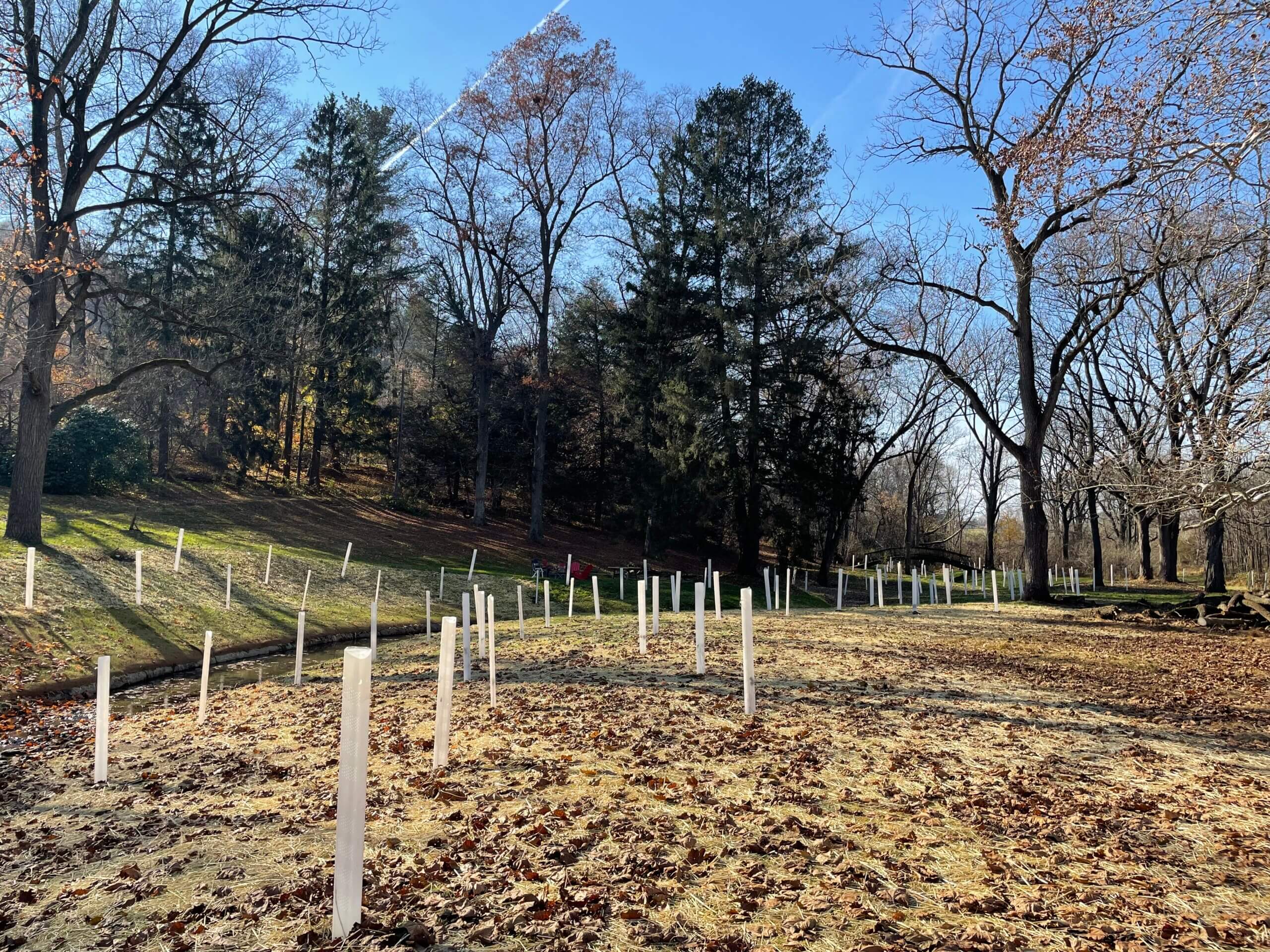
The tree tubes aid in the successful growth and development of the newly planted seedlings.
The Big Picture – Delisting Streams and the Chesapeake Bay
How is our work impacting the greater community? First, cleaning up this tributary is a part of the Lancaster Clean Water Partner’s “Delisting Strategy.” The goal is to focus our efforts on smaller watersheds so the streams can be “delisted” from the impaired (unhealthy) stream list. Looking even bigger, this project is a part of implementing the Pequea Watershed Implementation Plan, a tool that prioritizes restoration efforts in the Pequea Creek.
Going further downstream, stream restoration not only cleans up our local streams, but it has an impact on the Chesapeake Bay Watershed! Many of the issues we experience in Lancaster County — pollutants from agriculture, runoff from developed areas, streambank erosion, habitat loss, etc. — are threatening the Bay’s health too. The Bay is experiencing excess nitrogen and phosphorus pollution, which has created a dead zone. Algae rapidly grow when they can feed on the overabundance of nitrogen and phosphorous. The algae blooms lower the oxygen levels in the water, killing off any life beneath the water’s surface. So, if we can help prevent pollutants from entering our local waterways, we can also play a part in restoring the water quality of this beautiful watershed. That is why stream restoration is so important – we all live downstream!
Final Result
We would like to thank all who were involved in making this project possible.
Funding sources: National Fish & Wildlife Foundation (NFWF) and Constellation Energy
Partners: Lancaster County Conservation District (LCCD), Clean Water Partners (CWP), Lancaster Conservancy, U.S. Fish & Wildlife Service (USFWS), and Unique Excavating
– Watershed Team at the Lancaster County Conservation District