
Conserving Lancaster's streams since 1950
Stream Restoration Case Studies
Mill Creek Watershed
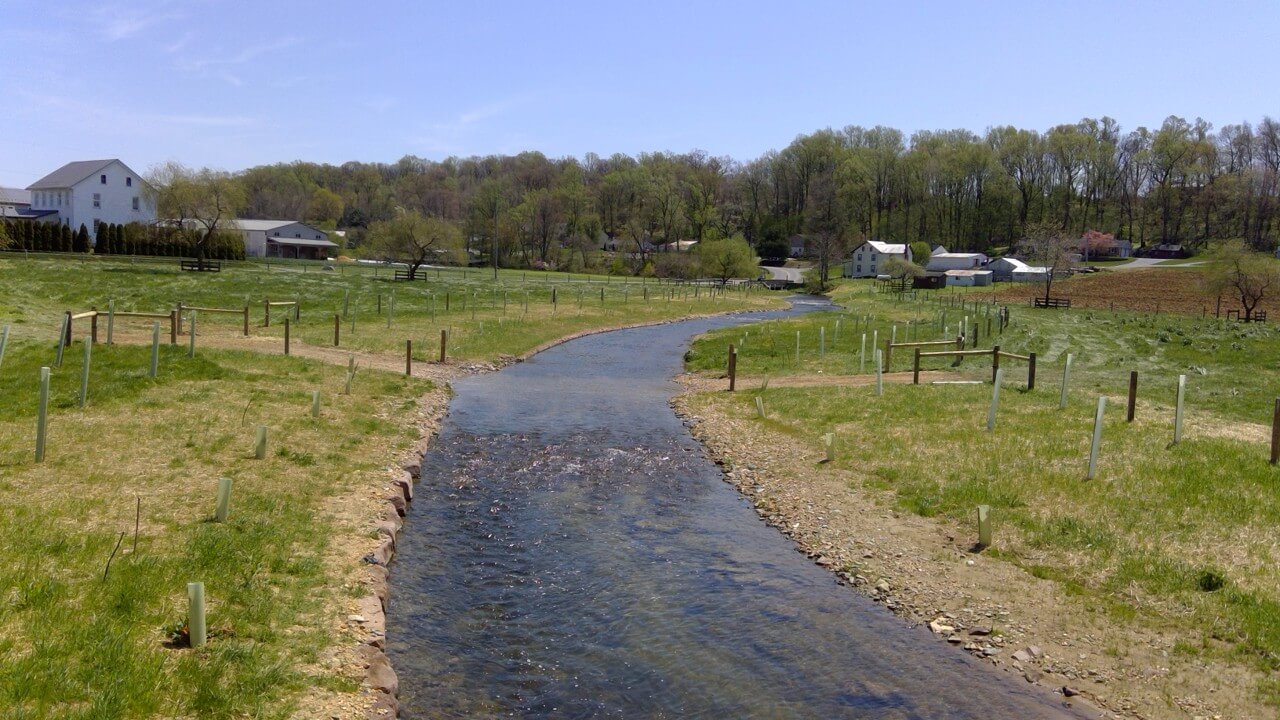
Beiler Stream Restoration
In 2020, a concerned landowner reached out to the District, worried about the increased stormwater he was receiving from the Tanger Outlets and related shopping areas. During a big storm event, his pasture would flood, rendering it unusable for livestock. On top of the landowner’s concerns, the stream on his property, a tributary to Mill Creek, had limited habitat, significant siltation, and eroded banks. The stream and pasture needed help, and stream restoration was the tool the fix it. Using Mill Creek 319 funds from the EPA, we designed, permitted, and constructed a project that would restore the stream and reduce the landowner’s flooding problems.
A. Hoover Farm Riparian Buffer Planting
A landowner reached out to the District inquiring about getting a riparian buffer planted along a tributary to Mill Creek. At the District, Tyler Keefer, the watershed resource technician, worked with the landowner to design and plant a riparian buffer, resulting in a total of 1.2 acres, 325 trees, and 25 different species.
Conowingo Creek Watershed
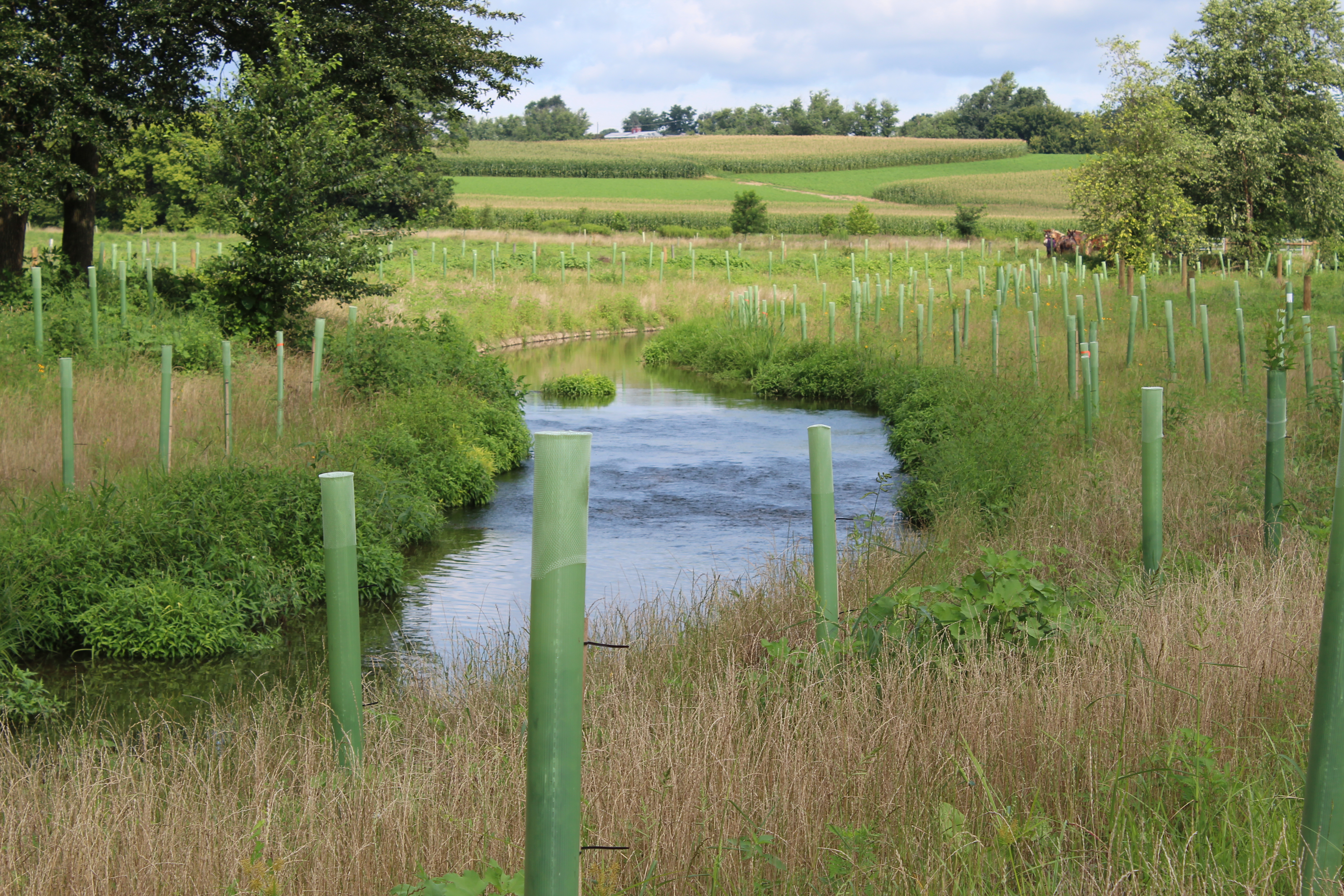
Esh Stream Restoration Project
Concerned about their stream’s highly eroded banks, a landowner located along the Conowingo creek reached out to Lancaster County Conservation District (LCCD) and Donegal Trout Unlimited (DTU) to see if the problem could be addressed. Increased sediment input and erosion along streambanks is a common issue that many landowner’s face in the county, and we knew just how to solve it. Through the EPA’s 319 Grant funding source, we were able to design a project that restored the stream and increased habitat availability for wildlife.
Pequea Creek Watershed
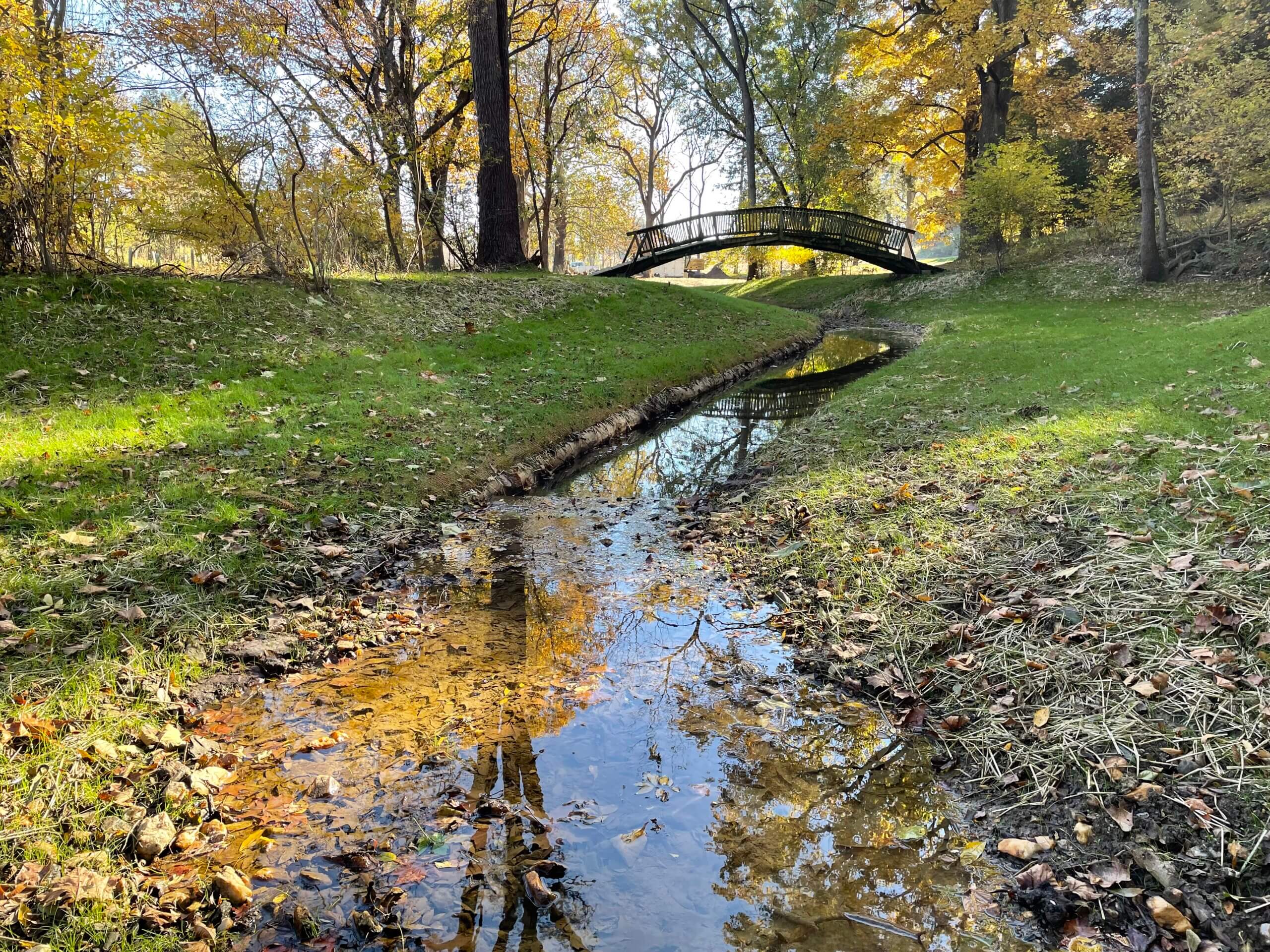
Lehman & Lancaster Conservancy Stream Restoration
In 2021, a private landowner reached out to the District with concerns about their eroded banks. The private landowner later joined in collaboration with the Lancaster County Conservancy, as they manage the Shiprock Woods Nature Preserve, which is parallel to the stream. Together, the two agreed that a stream restoration project was necessary in order to solve issues resulting from heavy agriculture use upstream. Through Exelon Habitat Improvement and National Fish & Wildlife Foundation (NFWF) funding sources, we were able to restore the stream and increase habitat availability.
Conestoga River Watershed
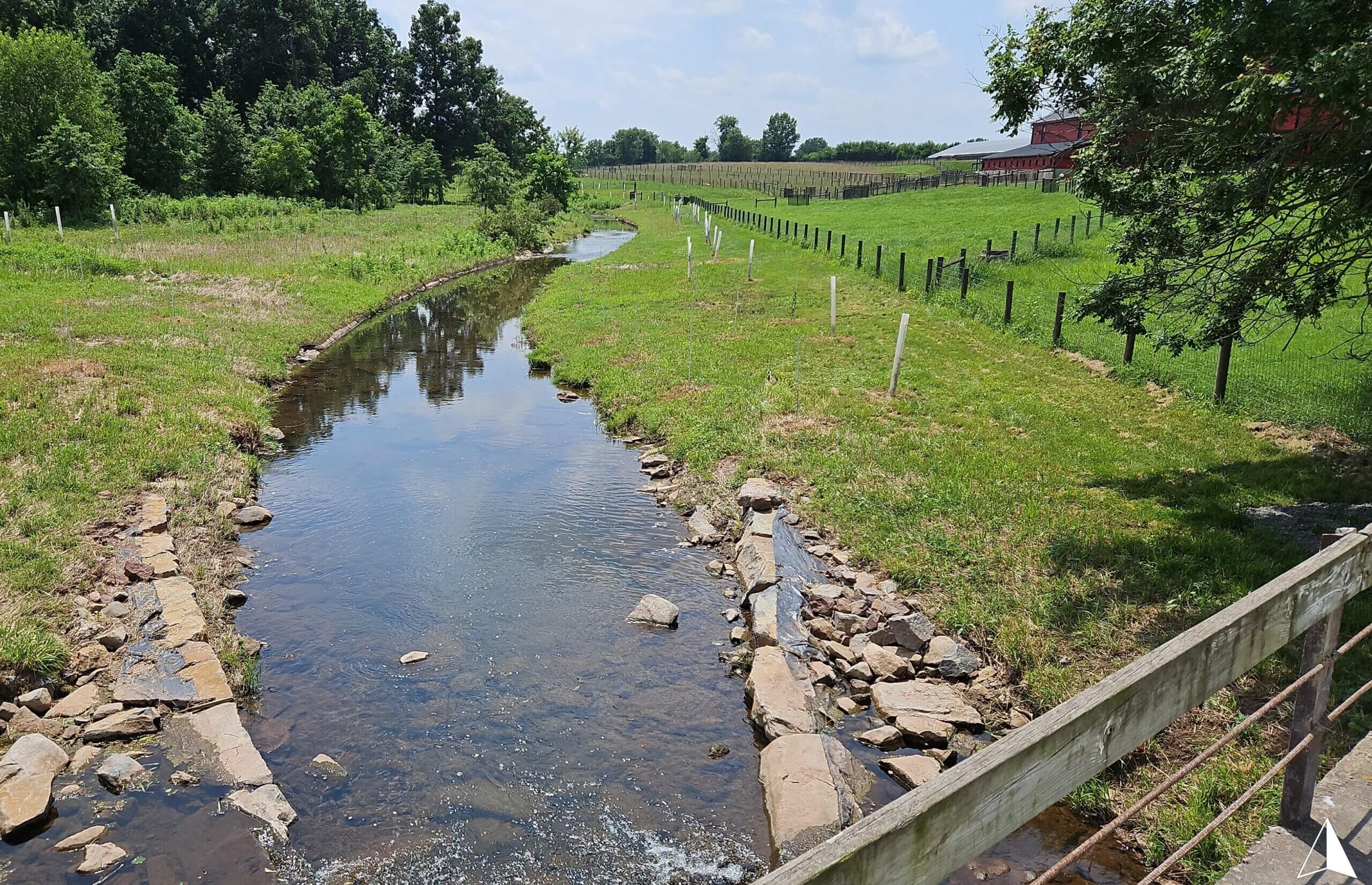
J. Hoover Farm Stream Restoration
A private landowner located on Muddy Creek reached out to the Lancaster County Conservation District (LCCD) with concerns about their eroded streambanks, failing stream crossing, and lack of trees. Muddy Creek is within the Conestoga River watershed, and like most other watersheds in the county, its main sources of water quality degradation come from increased nutrient inputs from agricultural runoff and sediment from erosion.
We partnered with U.S. Fish and Wildlife Service (USWFS) to design, permit, and construct a project that would restore the stream and increase habitat availability for wildlife. The project was funded through the Department of Environment Protection’s (DEP) Growing Greener Plus Grant.
Click here to learn more about how LCCD and USFWS restored the stream, and how this project served as an example of environmental stewardship and community engagement for a Plain Sect community.
Lancaster County Watershed Quick Links
Use these watershed links to find information that’s available for each of these locations.
Business Hours
Monday—Friday
7:30am-4:00pm